

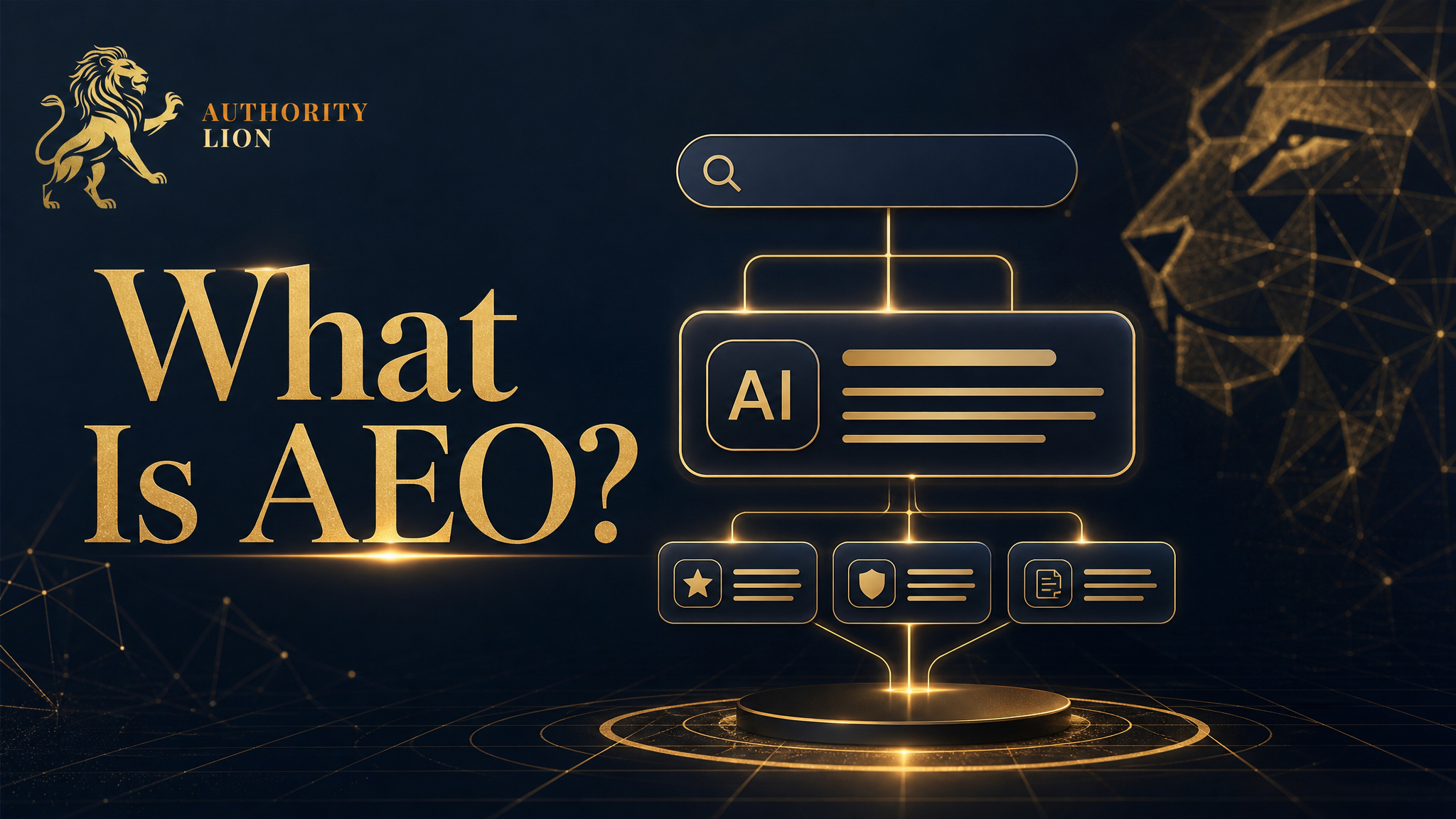
What Does AEO Mean in Simple Terms
AEO means structuring content so machines can identify:
- The topic of the content
- The factual information within the content
- The specific sections that answer user questions
According to Google (2023), structured data is a standardized format used to classify page content.
According to Similarweb (2025):
- Generative AI platforms produced more than 1.1 billion referral visits in June 2025
- This represents 357% year-over-year growth
AEO enables content to be machine-readable and extractable within AI search systems.
Key Characteristics of AEO Optimization
1. Predictable Structure
Structured content has demonstrated measurable performance gains:
- Rotten Tomatoes: 25% higher click-through rate
- Food Network: 35% increase in visits
- Nestlé: 82% higher click-through rate
Structured formatting allows systems to classify and display content more effectively.
2. Explicit Semantics
Structured data enables systems to classify attributes such as price, availability, and ratings. Explicit labeling reduces ambiguity and improves content interpretation by search systems.
3. Question-and-Answer Formatting
FAQ and Q&A formats are supported for rich results and direct answer extraction. These formats match how AI systems retrieve and present information.
4. Fact Visibility
Structure-aware retrieval systems have been evaluated across 900+ questions and 80 structured documents, demonstrating improved question-answering performance when content is explicitly structured.
5. Search-Result Readiness
Structured data enables content to appear across Google Search, Google Images, and Google Lens. Structured content is eligible for enhanced display formats that expose key attributes directly in results.
How AEO Optimization Works
Step 1: Define Content Explicitly
Structured data provides machine-readable signals that define page meaning.
Step 2: Structure Content into Sections
AI systems use query fan-out techniques to retrieve information across subtopics (Google, 2025). Content organized into clear sections supports this retrieval process.
Step 3: Match Retrieval Patterns
AI search systems prioritize definitions, comparisons, and direct answers. Content that follows these formats is more easily extracted and reused.
Step 4: Enable Answer Extraction
Structured content has demonstrated measurable engagement improvements:
- 1.5× increase in time on page
- 3.6× higher interaction rate
AEO vs SEO
| Feature | SEO | AEO |
|---|---|---|
| Primary goal | Rank pages | Generate answers |
| Output | Links | Direct answers |
| Metric | Traffic | Citations |
| Focus | Authority | Clarity |
According to SparkToro (2024), 64% of searches result in no click. SEO focuses on ranking pages, while AEO focuses on structuring content for extraction into AI-generated answers.
Practical Applications
Content Hubs — Definition-first content supports answer extraction.
Product Pages — Structured data enables visibility of price, availability, and ratings.
FAQ Pages — Q&A formats support direct answer extraction.
Documentation — Structured tutorials align with AI retrieval systems and improve usability.
Why AEO Optimization Matters (As of March 2026)
- SparkToro (2024): 64% of searches result in no click
- Pew Research Center (2025): 8% CTR with AI summaries; 26% session end rate with AI summaries
- Similarweb (2025): 1.1 billion AI referral visits; 357% year-over-year growth
Search behavior increasingly favors answer-first interactions rather than link-based navigation.
Summary
AEO optimization structures content so AI search systems can interpret, extract, and present information as direct answers.
According to Google (2023), structured data improves content interpretation. According to SparkToro, Pew Research Center, and Similarweb, user behavior increasingly favors answer-first experiences.
AEO enables content to be selected and cited as the answer — not just indexed as a page.